
- Apr 9, 2015
Wild Turkey Talk
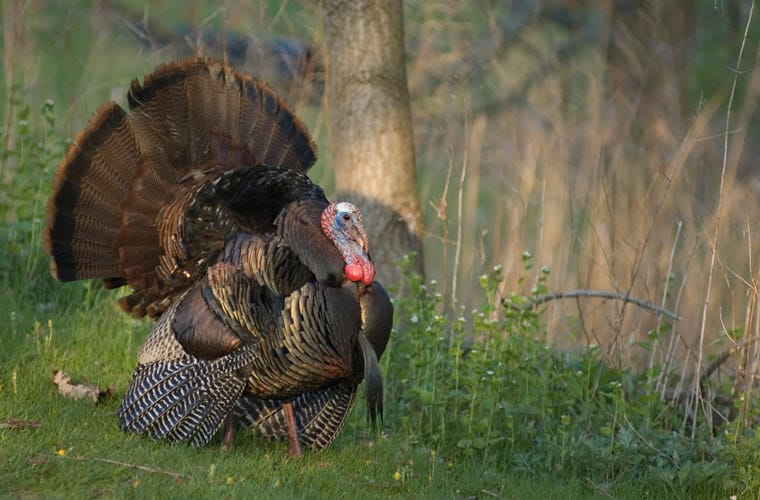
Birds are singing in the mornings. Spring is here. That means gobblers are getting fired-up. Here’s a run-down on some turkey talk. Wild turkey calls are a universal language no matter what part of America you’re hunting. Here are the basic sounds you should know:
Gobble — this call is uttered by the male turkeys to attract hens for breeding and to announce to the world that the tom is on watch and ready to defend his territory. It’s music to the ears of a turkey hunter.
Yelp — a two-toned sound - starts with a whistling "kee" and ends with and sharp "oak". This call means, "I’m here, come on over” in turkey language.
Kee Kee —Uttered by the young turkeys when a flock is scattered until the boss hen can regroup the flock.
Cluck — A single, sharp "puck" sound to announce the gobbler’s presence.
Purr — A broken-up sound at a low volume tells the flock that all is well. Turkeys will interpret it as a sign of agitation or aggression as the volume is increased.
Cackle — A series of fast clucks uttered when a turkey is flying or when a hen is sexually excited.
Putt — A loud cluck uttered when turkeys are alarmed. Putting is most often shortly followed by a hasty retreat.
-
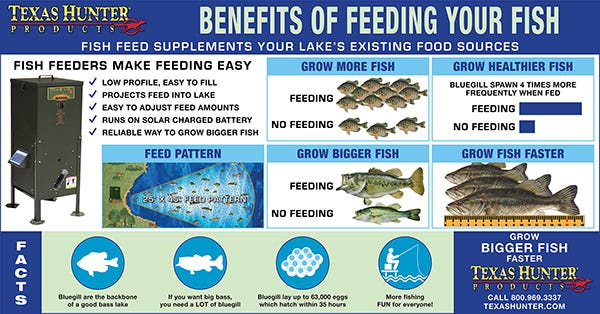
The secret to Texas Hunter’s patented automatic pond fish feeders is in the design and engineering. Texas Hunter Fish Feeders are available in three models or capacities: 70 lbs., 175 lbs., and 250 lbs. of fish feed. Texas Hunter Products has built a reputation in the automatic feeder industry for delivering tough, [...]
-
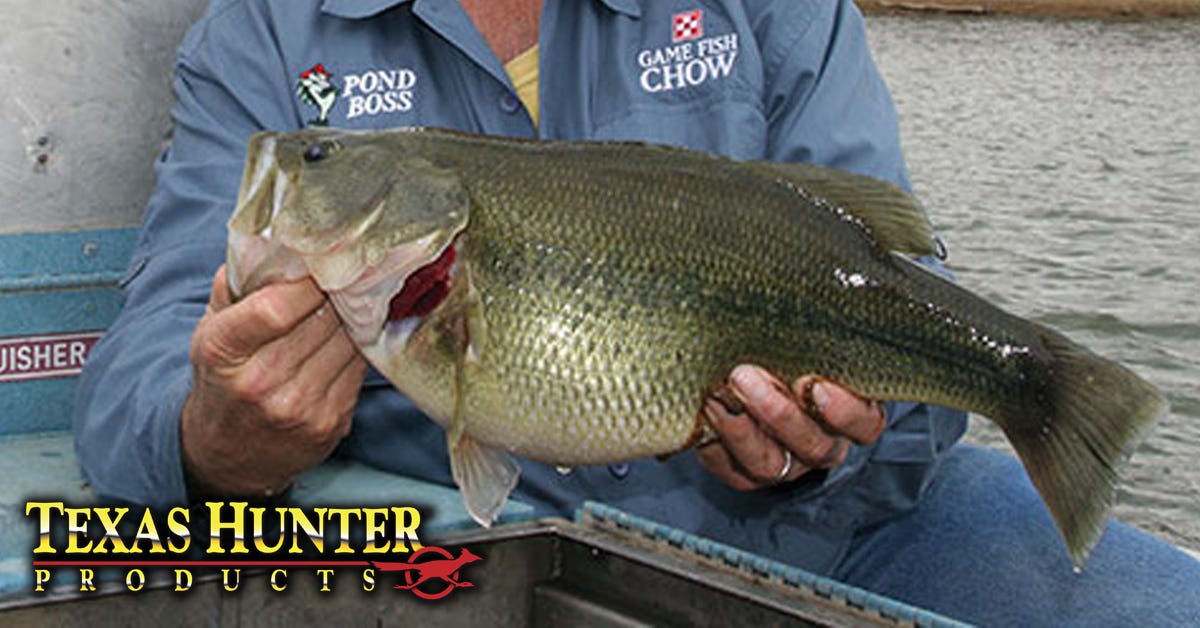 by Bob Lusk the Pond Boss In past years, feeding fish was a past-time. Folks were entertained by the novelty of finny critters chasing floating food pellets on the surface. They had not been informed about the benefits. What a difference a few years and fisheries science has made for today’s off-the chart results for–feeding fish. High [...]
 -
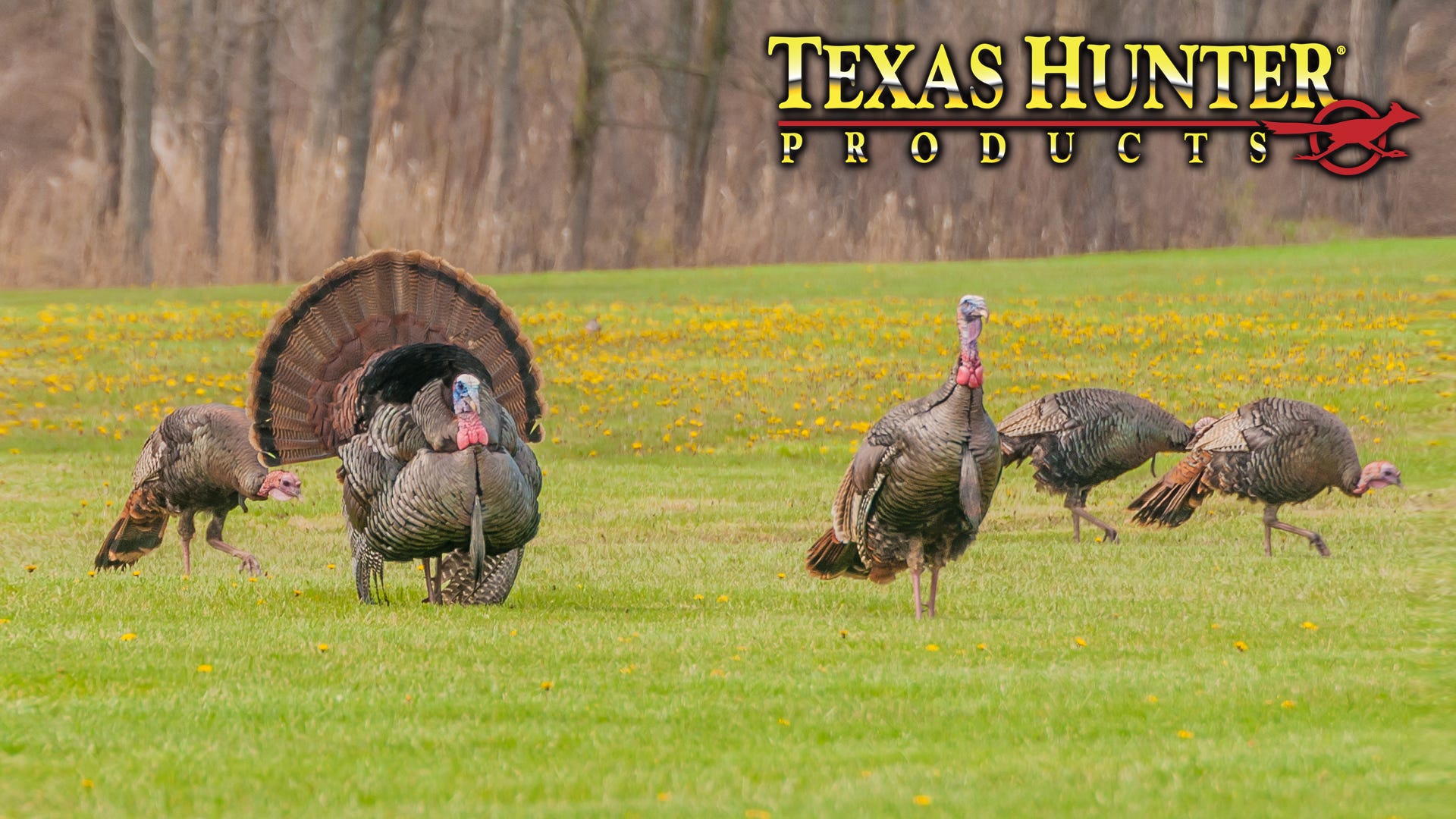
Every spring, countless hunters venture into the forests in search of wild turkeys. Regarded as one of the most demanding hunts, turkey hunting offers a rewarding challenge. Here are some invaluable tips to enhance your lifelong enjoyment of this thrilling sport.
